What Happens if Baby Is Given Two Different Formulas to Drink

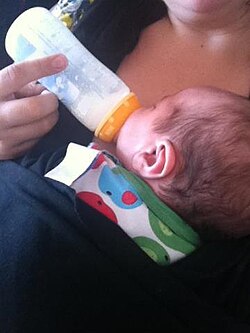
Infant formula, baby formula or merely formula (American English) or babe milk, infant milk, imitation milk, or outset milk (British English), is a manufactured nutrient designed and marketed for feeding to babies and infants under 12 months of historic period, commonly prepared for bottle-feeding or cup-feeding from pulverization (mixed with h2o) or liquid (with or without additional water). The U.Southward. Federal Food, Drug, and Cosmetic Act (FFDCA) defines infant formula equally "a food which purports to be or is represented for special dietary use solely as a nutrient for infants by reason of its simulation of man milk or its suitability equally a complete or fractional substitute for human milk".[ane]
Manufacturers state that the limerick of infant formula is designed to be roughly based on a human female parent's milk at approximately one to 3 months postpartum; however, in that location are meaning differences in the nutrient content of these products.[ii] The about usually used infant formulas comprise purified cow's milk whey and casein as a protein source, a blend of vegetable oils every bit a fat source[annotation one], lactose as a carbohydrate source, a vitamin-mineral mix, and other ingredients depending on the manufacturer.[3] In improver, at that place are infant formulas using soybean equally a protein source in place of cow'southward milk (generally in the The states and Great Great britain) and formulas using poly peptide hydrolysed into its component amino acids for infants who are allergic to other proteins. An upswing in breastfeeding in many countries has been accompanied by a deferment in the average age of introduction of infant foods (including cow'southward milk), resulting in both increased breastfeeding and increased apply of infant formula between the ages of 3- and 12-months.[4] [five]
A 2001 World Wellness Organization (WHO) report found that babe formula prepared in accordance with applicable Codex Alimentarius standards was a rubber complementary food and a suitable chest milk substitute. In 2003, the WHO and UNICEF published their Global Strategy for Infant and Immature Child Feeding, which restated that "processed-nutrient products for...young children should, when sold or otherwise distributed, meet applicative standards recommended by the Codex Alimentarius Commission", and also warned that "lack of breastfeeding—and specially lack of exclusive breastfeeding during the first half-yr of life—are important risk factors for infant and childhood morbidity and mortality".
In item, the use of infant formula in less economically developed countries is linked to poorer health outcomes because of the prevalence of unsanitary preparation conditions, including lack of clean water and lack of sanitizing equipment.[6] A formula-fed child living in unclean conditions is betwixt half dozen and 25 times more probable to die of diarrhea and four times more likely to die of pneumonia than a breastfed child.[seven] Rarely, use of powdered infant formula (PIF) has been associated with serious illness, and even death, due to infection with Cronobacter sakazakii and other microorganisms that can exist introduced to PIF during its production. Although C. sakazakii can cause illness in all age groups, infants are believed to exist at greatest risk of infection. Between 1958 and 2006, there have been several dozen reported cases of E. sakazakii infection worldwide. The WHO believes that such infections are under-reported.[8]
Uses, risks and controversies [edit]
The apply and marketing of baby formula has come up under scrutiny. Breastfeeding, including sectional breastfeeding for the first 6 months of life, is widely advocated as "ideal" for babies and infants, both by health authorities[six] [9] — and accordingly in ethical advertising of infant formula manufacturers.[10]
Despite the recommendation that babies exist exclusively breastfed for the first 6 months, less than 40% of infants below this age are exclusively breastfed worldwide.[11] The overwhelming bulk of American babies are not exclusively breastfed for this menses – in 2005 under 12% of babies were breastfed exclusively for the beginning 6 months,[nine] with over threescore% of babies of 2 months of age being fed formula,[12] and approximately one in four breastfed infants having babe formula feeding within two days of birth.[13]
Some studies accept shown that utilise of formula can vary according to the parents' socio-economic status, ethnicity or other characteristics. For example, according to a research conducted in Vancouver, Canada, 82.9% of mothers breastfeed their babies at nascence, but the number differed between Caucasians (91.vi%) and not-Caucasians (56.8%), with the difference essentially attributed to marital status, education and family income.[14] In the United States, mothers of lower socio-economical condition have been found less likely to breastfeed, although this may exist partly related to adverse effects of government diet supplementation programs that provide subsidies for babe formula.[15]
The use of hydrolysed cow milk baby formula versus standard milk baby formula does not appear to modify the risk of allergies or autoimmune diseases.[16]
Apply of babe formula [edit]
In some cases, breastfeeding is medically contraindicated. These include:
- Mother's health: The mother is infected with HIV or has agile tuberculosis.[17] She is extremely sick or has had certain kinds of chest surgery, which may have removed or asunder all milk-producing parts of the breast. She is taking whatever kind of drug that could harm the baby, including both prescription drugs such as cytotoxic chemotherapy for cancer treatments likewise as illicit drugs.[17]
- One of the master global risks posed by breast milk specifically is the manual of HIV and other infectious diseases. Breastfeeding past an HIV-infected mother poses a five–xx% chance of transmitting HIV to the infant.[xviii] [nineteen] [20] However, if a mother has HIV, she is more likely to transmit it to her child during the pregnancy or nascency than during breastfeeding. A 2012 report conducted by researchers from the University of North Carolina School of Medicine showed reduced HIV-1 transmission in humanized mice, due to components in the breast milk.[21] Cytomegalovirus infection poses potentially dangerous consequences for pre-term babies.[19] [22] Other risks include mother's infection with HTLV-one or HTLV-2 (viruses that could cause T-prison cell leukemia in the baby),[xix] [20] herpes simplex when lesions are present on the breasts,[20] and chickenpox in the newborn when the disease manifested in the mother inside a few days of nascence.[20] In some cases these risks tin exist mitigated past using heat-treated milk and nursing for a briefer fourth dimension (e.yard. 6 months, rather than 18–24 months), and tin can be avoided by using an uninfected woman's milk, every bit via a wet-nurse or milk banking company, or by using infant formula and/or treated milk.[23]
- In balancing the risks, such equally cases where the mother is infected with HIV, a decision to use infant formula versus exclusive breastfeeding may be made based on alternatives that satisfy the "AFASS" (Acceptable, Feasible, Affordable, Sustainable and Safe) principles.[23] [24]
- Babe is unable to breastfeed: The child has a birth defect or inborn error of metabolism such as galactosemia that makes breastfeeding difficult or impossible.[25]
- Baby is considered at chance for malnutrition: In sure circumstances infants may be at risk for malnutrition, such as due to fe deficiency, vitamin deficiencies (e.1000. vitamin D which may be less present in breast milk than needed at high latitudes where there is less sun exposure), or inadequate nutrition during transition to solid foods.[26] Risks tin often be mitigated with improved diet and didactics of mothers and caregivers, including availability of macro and micronutrients. For example, in Canada, marketed infant formulas are fortified with vitamin D, only Health Canada besides recommends breastfed infants receive extra vitamin D in the course of a supplement.[27]
- Personal preferences, beliefs, and experiences: The mother may dislike breast-feeding or retrieve it is inconvenient.[28] In add-on, breastfeeding tin can be difficult for victims of rape or sexual abuse; for example, it may be a trigger for posttraumatic stress disorder.[29] [30] Many families canteen feed to increase the father's part in parenting his child.[31]
- Mental Wellness: The pressure to breastfeed in many cultures tin be so much that the mother'south mental health may take a sharp decline. This can accept concrete effects such equally poor latching as well equally milk depletion and a lack of connection to the kid. In some cases information technology is improve for the kid to be formula fed so that a improve bond can be made between female parent and child rather than the 'special bond' that comes from breastfeeding being tainted by negative breastfeeding experiences. The pressure to breastfeed in many cultures can increment the likelihood of postpartum depression[32]
- Absence of the mother: The child is adopted, orphaned, abased, or in the sole custody of a human or male person same-sex couple. The female parent is separated from her child by being in prison or a mental hospital. The mother has left the kid in the care of some other person for an extended period of fourth dimension, such as while traveling or working abroad.
- Nutrient allergies: The mother eats foods that may provoke an allergic reaction in the babe.[ commendation needed ]
- Financial pressures: Maternity get out is unpaid, insufficient, or lacking. The mother's employment interferes with breastfeeding.[33] Mothers who breastfeed may experience a loss of earning ability.[34]
- Societal construction: Breastfeeding may be forbidden at the female parent'south job, school, place of worship or in other public places, or the mother may feel that breastfeeding in these places or around other people is immodest, unsanitary, or inappropriate.[33]
- Social pressures: Family members, such as female parent's husband or boyfriend, or friends or other members of order may encourage the use of babe formula. For instance, they may believe that breastfeeding will decrease the female parent's free energy, wellness, or attractiveness.[ commendation needed ] [35] Conversely, societal pressures to breastfeed can likewise atomic number 82 to mental health issues. A sense of shame from not beingness able to or struggling to do then equalling existence a failure has a connection to Postpartum Depression[32] The widely used phrase "Breast is Best" makes those who are struggling feel actress pressure and shame for not giving their child "the best". The phrase "Fed is Best" is starting to be used in replacement to salve some of that force per unit area and not let women who may be struggling autumn into the trap of feeling like bad mothers.
- Lack of grooming and education: The mother lacks instruction and training from medical providers or community members.[ citation needed ] [36]
- Lactation insufficiency: The female parent is unable to produce sufficient milk. In studies that do not business relationship for lactation failure with obvious causes (such as employ of formula and/or breast pumps), this affects around 2 to 5% of women.[37] Alternatively, despite a healthy supply, the woman or her family may incorrectly believe that her chest milk is of low quality or in low supply. These women may cull baby formula either exclusively or equally a supplement to breastfeeding.[ citation needed ]
- Fear of exposure to ecology contaminants: Certain environmental pollutants, such as polychlorinated biphenyls, tin bioaccumulate in the nutrient concatenation and may exist establish in humans including mothers' breast milk.[38]
- However studies accept shown that the greatest take a chance period for adverse effects from ecology exposures is prenatally.[38] Other studies take further establish that the levels of virtually persistent organohalogen compounds in human milk decreased significantly over the past three decades and every bit did their exposure through breastfeeding.[39]
- Research on risks from chemical pollution is generally inconclusive in terms of outweighing the benefits of breastfeeding.[forty] [41] Studies supported by the WHO and others take establish that neurological benefits of breast milk remain, regardless of dioxin exposure.[41] [42]
- In developing countries, environmental contaminants associated with increased health risks from use of infant formula, particularly diarrhea due to unclean h2o and lack of sterile weather – both prerequisites to the condom use of formula – often outweigh any risks from breastfeeding.
- Lack of other sources of breast milk:
- Lack of wet nurses: Moisture nursing is illegal and stigmatized in some countries, and may not be available.[43] It may likewise exist socially unsupported, expensive, or health screening of wet nurses may not be available. The mother, her physician,[44] or family may not know that wet nursing is possible, or may believe that nursing by a relative or paid moisture-nurse is unhygienic.
- Lack of milk banks: Human-milk banks may not exist available, as few exist, and many countries cannot provide the necessary screening for diseases and refrigeration.
Health risks [edit]
Use of babe formula has been cited for numerous increased wellness risks. Studies accept found infants in developed countries who consume formula are at increased risk for acute otitis media, gastroenteritis, astringent lower respiratory tract infections, atopic dermatitis, asthma, obesity,[45] type 1 and ii diabetes, sudden infant death syndrome (SIDS), eczema and necrotizing enterocolitis when compared to infants who are breastfed.[46] [47] [48] [49] Some studies take institute an association between infant formula and lower cognitive development, including fe supplementation in baby formula existence linked to lowered I.Q. and other neurodevelopmental delays;[fifty] [51] withal other studies have found no correlation.[46]
Melamine contamination [edit]
In 2008, a case of melamine poisoning of baby formula was discovered in China, where milk was deliberately adulterated with the chemical, leading to the death of half dozen babies, and illnesses in more than 300,000 infants, including cases of acute kidney failure. Large quantities of melamine were added to watered-down milk to give information technology the advent of having adequate protein levels. Some of those responsible for the poisoning were sentenced to decease.[52]
In November 2008, traces of melamine were reported to accept been found past the U.Southward. Nutrient and Drug Administration in infant formula sold in the United States made by the iii main American firms[53] [54] — Abbott Laboratories, Nestlé and Mead Johnson — responsible for ninety–99% of the infant formula market in that country.[fifteen] [53] The levels were much less than those reported in China, where levels of melamine contagion had reached as much every bit 2,500 parts per million, nearly x,000 times college than the recorded US levels. The safety data sheet for melamine (CAS registry number 108-78-1; C3-H6-N6) recorded the acute oral toxicity (median lethal dose) at 3161 mg/kg for a rat.
Health Canada conducted a divide test and likewise detected traces of melamine in infant formula available in Canada. The melamine levels were well beneath Health Canada's safe limits,[55] although concerns remain about the condom of manufactured food for infants and monitoring of potentially dangerous substances.[52]
Other health controversies [edit]
- In 1985, Syntex Corporation was ordered to pay $27 million in bounty for the deaths of 2 American infants who suffered brain damage after drinking the visitor'due south baby formula, called Neo-mull-soy.[56] Formulas produced by Syntex had previously been subject to a major recall as they were found to have insufficient chloride to support normal infant growth and evolution.[57]
- In 2003, baby plant-based formula manufactured by the German language company Humana and sold in Israel under the brand Remedia caused severe vitamin deficiencies in babies. Babies who consumed the formula were hospitalized with cardiac and neurological symptoms. Iii of them died, and at least twenty others were left with astringent disabilities. An investigation revealed that the formula contained a much lower quantity of Thiamine than is needed for good for you infant development considering of a manufacturing mistake. Humana's main nutrient technologist received a xxx-month prison sentence for negligent manslaughter in February 2013 over the case.[58]
- In 2010, Abbott Laboratories issued a voluntary recall of near five 1000000 Similac brand powder babe formulas that were sold in the United States, Guam, Puerto Rico and some Caribbean countries. The call up was issued after the presence of a 'small common protrude' was detected in the product.[59]
- In Canada, New Zealand and elsewhere, public concerns have been raised over the continued sale and marketing of soy-based formulae potentially containing high levels of phytoestrogens,[60] [61] linked to aberrant kid evolution[62] including harm to babies' thyroid glands.
- In December 2011 Wal-Mart recalled a quantity of infant formula later on a babe died in Missouri. "Nosotros extend our deepest condolences to this baby boy's family unit as they try to come to grips with their loss," said Dianna Gee, a Wal-Mart spokeswoman. "As soon every bit nosotros heard what happened, nosotros immediately reached out to the manufacturer of the formula and to the Department of Wellness and Senior Services to provide any information nosotros may have to help with the investigation." Wal-Mart said it pulled a batch of Enfamil from its stores nationwide that matched the size and lot number ZP1k7G of the formula that may have sickened the babe in Missouri, Gee said. The baby formula was purchased from a Wal-Mart in Lebanese republic, Missouri. Subsequently the buy, a 10-day-old babe died from a rare bacterial infection, CNN affiliate KYTV reported. Authorities ran tests to determine if the decease came from the formula, the h2o to brand the formula or whatever other cistron, said Mead Johnson Nutrition, the company that makes Enfamil. "We are highly confident in the safe and quality of our products – and the rigorous testing we put them through," said Chris Perille, a Mead Johnson Diet spokesman.[Source CNN]
Grooming and content [edit]
Variations [edit]
Babe formulas come in pulverisation, liquid concentrate, and ready-to-feed forms. They are designed to be prepared past the parent or caregiver in small batches and fed to the infant, normally with either a cup or a baby bottle.[half dozen]
Baby formulas come in a variety of types:
- Moo-cow'south milk formula is the virtually commonly used blazon. The milk has been altered to resemble breast milk.
- Soy poly peptide based formulas are frequently used for infants allergic to moo-cow's milk or lactose. Soy-based formulas can also be useful if the parent wants to exclude animal proteins from the kid'due south diet.
- Poly peptide hydrolysate formulas incorporate protein that'southward been broken down into smaller sizes than are those in cow's milk and soy-based formulas. Poly peptide hydrolysate formulas are meant for babies who do not tolerate cow'south milk or soy-based formulas.
- Specialized formulas are also available for premature infants and those with specific medical conditions.[63]
Manufacturers and health officials advise it is very important to mensurate powders or concentrates accurately to achieve the intended final production concentration; otherwise, the kid will be malnourished. It is advisable that all equipment that comes into contact with the infant formula exist cleaned and sterilized before each apply. Proper refrigeration is essential for whatsoever infant formula which is prepared in accelerate.
In developing countries, formula is frequently prepared improperly, resulting in high babe mortality due to malnutrition and diseases such as diarrhea and pneumonia. This is due to lack of clean h2o, lack of sterile weather condition, lack of refrigeration, illiteracy (then written instructions cannot be followed), poverty (diluting formula so that it lasts longer), and lack of education of mothers by formula distributors. These issues and resulting affliction and expiry are a key factor in opposition to the marketing and distribution of babe formula in developing countries past numerous public health agencies and NGOs (discussed in more detail at Nestlé boycott and International Code of Marketing of Breast-milk Substitutes).
Nutritional content [edit]
Also breast milk, babe formula is the only other milk product which the medical community considers nutritionally acceptable for infants under the age of i yr (every bit opposed to cow'due south milk, goat's milk, or follow-on formula). Supplementing with solid food in addition to breast milk or formula begins during weaning, and most babies begin supplementing about the fourth dimension their first teeth appear, usually effectually the historic period of 6 months.
Although cow's milk is the ground of almost all infant formula, plain moo-cow's milk is unsuited for infants considering of its high casein content and depression whey content, and untreated cow'due south milk is not recommended before the age of 12 months. The infant intestine is non properly equipped to assimilate non-human milk, and this may often result in diarrhea, intestinal haemorrhage and malnutrition.[64] To reduce the negative effect on the infant's digestive system, cow's milk used for formula undergoes processing to be made into infant formula. This includes steps to make protein more hands digestible and alter the whey-to-casein protein residue to 1 closer to human milk, the add-on of several essential ingredients (often called "fortification", come across below), the fractional or full replacement of dairy fat with fats of vegetable or marine origin, etc.
The food content of infant formula for sale in the Usa is regulated by the Nutrient and Drug Administration (FDA) based on recommendations past the American Academy of Pediatrics Committee on Nutrition. The following must be included in all formulas produced in the U.S.:[65]
- Protein
- Fatty
- Linoleic acid
- Vitamins: A, C, D, E, K, thiamin (B1), riboflavin (Btwo), B6, B12
- Niacin
- Folic acid
- Pantothenic acid
- Calcium
- Minerals: magnesium, iron, zinc, manganese, copper
- Phosphorus
- Iodine
- Sodium chloride
- Potassium chloride
- Carbohydrates
- Carbohydrates are an important source of energy for growing infants, equally they business relationship for 35 to 42% of their daily energy intake. In most cow's milk-based formulas, lactose is the main source of carbohydrates present, but lactose is not nowadays in cow's milk-based lactose-costless formulas nor specialized non-milk poly peptide formulas or hydrolyzed poly peptide formulas for infants with milk protein sensitivity. Lactose is also not present in soy-based formulas. Therefore, those formulas without lactose will use other sources of carbohydrates, such as sucrose and glucose, dextrins, and natural and modified starches. Lactose is not but a adept source of free energy, it besides aids in the absorption of the minerals magnesium, calcium, zinc and iron.[66]
- Homo milk oligosaccharides (HMOs)
- HMOs are naturally occurring sugars establish in human being breast milk, they improve the immune organization and act as nutrients to beneficial gut bacteria.[67] Some manufacturers also use man milk oligosaccharides every bit a modernistic infant formula supplement to give additional wellness benefits to their products, however they are not constitute all types of formula.[68]
- Nucleotides
- Nucleotides are compounds found naturally in human being breast milk. They are involved in disquisitional metabolic processes, such as free energy metabolism and enzymatic reactions. Also, as the building blocks of deoxyribonucleic acid (Dna) and ribonucleic acrid (RNA), they are essential for normal body functions. Compared to human chest milk, cow's milk has lower levels of the nucleotides uridine, inosine, and cytidine. Therefore, several companies that produce baby formula take added nucleotides to their infant formulas.[66]
Other normally used ingredients:
- Emulsifiers and stabilizers: Ingredients added to prevent the separation of the oil from the water (and its soluble components) in the infant formula. Some commonly used emulsifiers include monoglycerides, diglycerides, and gums.[65]
- Diluents: Skim milk is usually used as the primary diluent in milk-based liquid formula to provide the bulk of the book. In contrast, purified water is the most normally used diluent in milk-free formulations.[65]
Policy, manufacture and marketing [edit]
The policy, regulatory and industry environments surrounding the baby formula market vary tremendously between countries.
International [edit]
The International Code of Marketing of Breast-milk Substitutes is an international health policy framework adopted by the Earth Wellness Assembly of the WHO in 1981 regarding infant formula marketing, including strict restrictions on ad.[69] Its implementation depends on the laws of different countries and the behavior of baby formula manufacturers – the code has no power itself. Legislation and corporate behavior vary significantly between countries: at to the lowest degree 84 countries have enacted national legislation implementing all or many of the provisions of the Code and 14 countries have draft laws awaiting adoption;[70] whereas elsewhere neither the Code nor its principles are followed past governments or formula manufacturers.
Practices that are banned in the Code include most advert, claiming health benefits for formula, and giving free samples to women able to breastfeed – this latter exercise is particularly criticized because it tin interfere with lactation, creating dependence on formula. In many countries costless samples of infant formula accept been provided to hospitals for decades; infant formula is oftentimes the only product routinely provided complimentary of charge to hospitals.[71] The Baby Friendly Hospital Initiative aims to reduce and eliminate this controversial exercise.
By land [edit]
Philippines [edit]
Babe formula is one of the top three consumer commodities in the Philippines, and among the nigh imported products.[72] Annual sales amount to some US$469 one thousand thousand annually. United states of america$88 one thousand thousand is spent on advertising the production.[73]
Infant formula marketing has been regulated since the 1987 Executive Society 51 or "Milk Lawmaking",[74] which regulated, but did not ban, practices such as advertisement and providing free samples. Shortly afterward information technology was enacted, Wyeth introduced "follow-on formula", which was not in the purview of the Milk Lawmaking which predated its market entry.
In 2006, the Department of Wellness banned the advertising of babe formula and the practice of providing costless samples, regardless of intended age group (in the Revised Implementing Rules and Regulations of Executive Order 51, or RIRR).[75] The new regulation was challenged by the infant formula industry in the Supreme Court. Initially the challenge was dismissed, but this conclusion was reversed following industry force per unit area and a controversial letter by American business leader Thomas Donahue,[76] then President and CEO of the Usa Chamber of Commerce, resulting in the regulation being suspended and advertising continuing.[72] [74] [75] [77]
The Guardian newspaper reports widespread illegal advertising and marketing of formula milk contrary to Earth Health Organization guidelines. Doctors and midwives are encouraged to promote feeding babies formula milk, advertising also targets mothers straight. Babies get sick and sometimes die because poor mothers cannot sterilize bottles.[78]
S Africa [edit]
In Southward Africa, in that location is a move towards manifestly packaging of infant formula[79] under R 991 of the Foodstuffs, Cosmetics and Disinfectants Act; as of 6 Dec 2013, Regulation vii (Sale and Promotion) is force, whereas Regulations two-6 (primarily with respect to labelling) are scheduled to come into force on 6 Dec 2014. I of the key requirements every bit per Regulation 3.one.A.iii is a conspicuous bulletin stating "[t]his production shall only be used on the advice of a health professional person".
United Kingdom [edit]
In the Great britain, infant formula advertizing has been allowed since 1995;[80] advertising for "follow-on formula" is legal, which has been cited every bit a loophole allowing advertising of similarly packaged formula.[81]
U.s. [edit]
In the United States, infant formula is both heavily marketed – the country has not adopted the Lawmaking, nor is it beingness systematically implemented by manufacturers for domestic marketing[82] – and fifty-fifty heavily subsidized past the government: at least one third of the American market is supported by the government,[83] with over half of infant formula sold in the country provided through the Special Supplemental Diet Program for Women, Infants, and Children (known equally WIC).[15]
According to surveys, over 70% of big U.S. hospitals manipulate infant formula to all infants, a exercise opposed by the American Academy of Pediatrics and in violation of the Lawmaking.[84] The Gerber Products Visitor began marketing its brand of infant formula straight to the public in October 1989, while the Carnation Company began marketing Good Starting time baby formula directly to the public in January 1991.[84]
Baby formula costs are a meaning fraction of the WIC program costs: 21% postal service-rebate and 46% pre-rebate.[15] Formula manufacturers are granted a WIC monopoly in individual states.[15] Meanwhile, breastfeeding rates are substantially lower for WIC recipients;[85] this is partly attributed to formula being free of charge to mothers in the WIC program, who are of lower socio-economic status.[15] Violations of federal policy have besides been found in terms of infant formula company advertizement using the WIC trademark, to achieve both WIC and non-WIC participants.[85] In recent years WIC has been expanding its breastfeeding promotion strategies, including providing subsidies for clients who use milk banks.[86]
History [edit]
The Wabanaki and other Native American tribal nations of North America did make an infant formula from nuts and cornmeal.[87] Elizabeth Hanson was captured by Wabanaki in 1725 and a Native American adult female showed Hanson how to make this babe formula and this she did include in her captivity narrative.
Early on infant foods [edit]
In 1865, the showtime baby food was invented.[88]
Throughout history, mothers who could non breastfeed their babies either employed a wet nurse[89] or, less ofttimes, prepared food for their babies, a process known as "dry nursing".[89] [xc] Baby food composition varied according to region and economic status.[90] In Europe and North America during the early 19th century, the prevalence of wet nursing began to decrease, while the practise of feeding babies mixtures based on creature milk rose in popularity.[91] [92]

Poster advertisement for Nestle's Milk past Théophile Alexandre Steinlen, 1895
This tendency was driven by cultural changes likewise every bit increased sanitation measures,[93] and information technology continued throughout the 19th and much of the 20th century, with a notable increment afterwards Elijah Pratt invented and patented the India-prophylactic nipple in 1845.[89] [94] Every bit early as 1846, scientists and nutritionists noted an increment in medical problems and babe bloodshed was associated with dry nursing.[91] [95] In an attempt to improve the quality of manufactured baby foods, in 1867, Justus von Liebig developed the world's first commercial babe formula, Liebig'south Soluble Food for Babies.[96] The success of this product chop-chop gave rise to competitors such as Mellin's Food, Ridge's Food for Infants and Nestlé's Milk.[97]
Raw milk formulas [edit]
As physicians became increasingly concerned nearly the quality of such foods, medical recommendations such as Thomas Morgan Rotch's "per centum method" (published in 1890) began to be distributed, and gained widespread popularity by 1907.[89] These complex formulas recommended that parents mix cow'south milk, water, cream, and sugar or love in specific ratios to reach the nutritional balance believed to gauge human being milk reformulated in such a way equally to accommodate the believed digestive capability of the infant.[4]

A 1915 advertisement for "Nestlé's Food"
At the dawn of the 20th century in the United States, most infants were breastfed, although many received some formula feeding likewise. Home-made "percentage method" formulas were more commonly used than commercial formulas in both Europe and the United states of america.[98] They were less expensive and were widely believed to be healthier. However, formula-fed babies exhibited more nutrition-associated medical problems, such as scurvy, rickets and bacterial infections than breastfed babies. By 1920, the incidence of scurvy and rickets in formula-fed babies had greatly decreased through the improver of orange juice and cod liver oil to home-fabricated formulas. Bacterial infections associated with formula remained a problem more prevalent in the United States than in Europe, where milk was usually boiled prior to apply in formulas.[98]
Evaporated milk formulas [edit]
In the 1920s and 1930s, evaporated milk began to exist widely commercially bachelor at depression prices, and several clinical studies in the period suggested that babies fed evaporated milk formula thrived as well as breastfed babies.[89] [99]
These studies, accompanied by the affordable toll of evaporated milk and the availability of the home icebox initiated a tremendous ascension in the use of evaporated milk formulas.[four] By the late 1930s, the use of evaporated milk formulas in the U.s. surpassed all commercial formulas, and by 1950 over half of all babies in the U.s. were reared on such formulas.[89]
Commercial formulas [edit]
In parallel with the enormous shift (in industrialized nations) away from breastfeeding to home-fabricated formulas, diet scientists connected to clarify human milk and attempted to make infant formulas that more than closely matched its composition.[iv] Maltose and dextrins were believed nutritionally of import, and in 1912, the Mead Johnson Company released a milk condiment called Dextri-Maltose. This formula was made available to mothers simply by physicians. In 1919, milkfats were replaced with a alloy of animal and vegetable fats as part of the connected drive to closer simulate human being milk. This formula was called SMA for "simulated milk adapted."[89]
In the late 1920s, Alfred Bosworth released Similac (for "like to lactation"), and Mead Johnson released Sobee.[89] Several other formulas were released over the side by side few decades, but commercial formulas did not begin to seriously compete with evaporated milk formulas until the 1950s. The reformulation and concentration of Similac in 1951, and the introduction (past Mead Johnson) of Enfamil (for "infant milk") in 1959 were accompanied by marketing campaigns that provided inexpensive formula to hospitals and pediatricians.[89] By the early on 1960s, commercial formulas were more normally used than evaporated milk formulas in the United States, which all only vanished in the 1970s. By the early 1970s, over 75% of American babies were fed on formulas, almost entirely commercially produced.[4]
When birth rates in industrial nations tapered off during the 1960s, baby formula companies heightened marketing campaigns in not-industrialized countries. Unfortunately, poor sanitation led to steeply increased mortality rates among infants fed formula prepared with contaminated h2o.[100] Additionally, a WHO has cited over-diluting formula preparations as resulting in baby malnourishment.[101] Organized protests, the most famous of which was the Nestlé boycott of 1977, called for an end to unethical marketing. This boycott is ongoing, equally the electric current coordinators maintain that Nestlé engages in marketing practices which violate the International Code of Marketing of Breast-milk Substitutes.
Generic brand formulas [edit]
In add-on to commercially marketed brands, generic brands (or store brands) of infant formula were introduced in the United States in 1997, first past PBM Products. These private label formulas are sold by many leading food and drug retailers such as Wal-Mart, Target, Kroger, Loblaws, and Walgreens. All babe formula brands in the United States are required to adhere to the Nutrient and Drug Administration (FDA) guidelines. Equally reported by the Mayo Clinic: "as with most consumer products, brand-proper noun babe formulas cost more than generic brands. But that doesn't hateful that make-name [Similac, Nestle, Enfamil] formulas are better. Although manufacturers may vary somewhat in their formula recipes, the FDA requires that all formulas comprise the same nutrient density."[102]
Similarly, in Canada all infant formulas regardless of brand are required to meet standards set up by Wellness Canada.[103]
Follow-on and toddler formulas [edit]
Follow-on or toddler formulas are sold for ages six months to three years (when infants are typically breastfed). In the U.s.a., a transition formula is marketed for children from age 9 to 24 months, and a toddler milk is sold for children historic period 12 to 26 months.[104] In both cases, the ingredients are powdered milk, corn syrup and other added sugars, vegetable oil, and salt.[105] [106]
Toddler formulas are not nutritionally complete, nor are they field of study to the aforementioned regulations or nutrient labeling laws as infant formula.[104] Critics have argued that follow-on and toddler formulas were introduced to circumvent the regulations regarding baby formula and have resulted in confusing ad.[81]
An early example of follow-on formula was introduced past Wyeth in the Philippines in 1987, following the introduction in this land of regulations on babe formula ad, only which did not address follow-on formulas (products that did not exist at the time of their drafting).[74] Similarly, while baby formula advertising is illegal in the U.k., follow-on formula advertising is legal, and the similar packaging and market results in follow-on advertisements ofttimes being interpreted as advertisements for formula.[81] (Encounter besides industry and marketing, beneath.)
These products take also recently fallen under criticism for contributing to the babyhood obesity epidemic in some adult countries due to their marketing and flavoring practices.[107] The drinks are also expensive.[106] Although normally not quite as expensive as infant formula,[105] they tin can cost four times the price of cow's milk.[106]
Usage since 1970s [edit]
Since the early on 1970s, industrial countries have witnessed a resurgence in breastfeeding amid newborns and infants to 6 months of age.[5] This upswing in breastfeeding has been accompanied by a deferment in the average age of introduction of other foods (such equally cow'due south milk), resulting in increased use of both breastfeeding and infant formula betwixt the ages of 3–12 months.[iv] [5]
The global infant formula market has been estimated at $7.nine billion,[83] with North America and Western Europe accounting for 33% of the market and considered largely saturated, and Asia representing 53% of the market place.[108] Southward Eastward Asia is a particularly large fraction of the world market relative to its population.[108] Baby formula is the largest segment of the babe food market place,[108] with the fraction given equally between twoscore%[108] and 70%.[83]
Leading wellness organizations (eastward.g. WHO, U.Due south. Centers for Affliction Control and Section of Health and Man Services) are attempting to reduce the use of infant formula and increase the prevalence of breastfeeding from birth through 12 to 24 months of age through public health awareness campaigns.[9] [109] [110] [111] The specific goals and approaches of these breastfeeding promotion programs, and the policy environment surrounding their implementation, vary by country. As a policy basic framework, the International Lawmaking of Marketing of Chest-milk Substitutes, adopted by the WHO's World Health Associates in 1981, requires infant formula companies to preface their production information with statements that breastfeeding is the all-time mode of feeding babies and that a substitute should only be used after consultation with health professionals.[69] The Baby Friendly Infirmary Initiative too restricts use by hospitals of free formula or other infant care aids provided past formula companies. (See also Policy department beneath.)
Baby formula processing [edit]
History [edit]
| Dates | Events |
|---|---|
| 1867 | A formula containing wheat flour, cow'due south milk, malt flour, and potassium bicarbonate was developed.[112] |
| 1915 | A powder form of infant formula was introduced, containing cow'south milk, lactose, oleo oils, and vegetable oils.[112] |
| 1929 | Soy formula was introduced.[112] |
| 1935 | Protein was added because it was believed cow's milk protein content was lower than homo milk protein content; protein at iii.3–4.0 g/100 kcal was added.[112] |
| 1959 | Iron fortification was introduced because a big amount of atomic number 26 (~80%) is used to aggrandize the blood-red blood jail cell mass in a growing baby. Infants with birth weights between 1500 and 2500g require two mg/kg of fe per twenty-four hours. Infants with weights of less than 1500g require 4 mg/kg per mean solar day.[112] [113] |
| 1962 | The whey:casein ratio was fabricated similar to homo milk because producers were aware that human milk contains a higher ratio of whey protein, and moo-cow's milk contains a college ratio of casein.[112] |
| 1984 | Taurine fortification was introduced considering newborn infants lack the enzymes needed to catechumen and class taurine.[112] [114] |
| Tardily 1990 | Nucleotide fortification was introduced into baby formula because nucleotides tin can act every bit growth factors and may raise the baby immune organization.[112] |
| Early 2000 | Polyunsaturated fat acid fortification was introduced. Polyunsaturated fatty acids, such as docosahexaenoic acid (DHA) and arachidonic acid (ARA), were added considering those fat acids play an important role in infant encephalon development.[112] |
Current general procedure [edit]
The manufacturing process may differ for unlike types of formula made; therefore the following is the general procedure for liquid-milk based formulas:[65]
Mixing ingredients [edit]
Principal ingredients are blended in large stainless steel tanks and skim milk is added and adapted to 60 °C. Then, fats, oils and emulsifiers are added. Additional heating and mixing may be required to get proper consistency. Next, minerals, vitamins, and stabilizing gums are added at diverse points, depending on their sensitivity to heat. The batch is temporarily stored and then transported by pipelines to pasteurization equipment when mixing is complete.[65]
Pasteurization [edit]
This is a process that protects against spoilage by eliminating bacteria, yeasts and molds. It involves quickly heating and and so cooling of the production nether controlled conditions which micro-organisms cannot survive. The batch is held at around 85–94 °C for approximately 30 seconds which is necessary to adequately reduce micro-organisms and fix the formula for filling.[65]
Homogenization [edit]
This is a procedure which increases emulsion uniformity and stability by reducing size of fatty and oil particles in the formula. Information technology is done with a variety of mixing equipment that applies shear to the product and this mixing breaks fat and oil particles into very modest droplets.[65]
Standardization [edit]
Standardization is used to ensure that the key parameters like pH, fat concentration and vitamins and mineral content are correct. If insufficient levels of these are institute, the batch is reworked to achieve appropriate levels. Later on this step, the batch is prepare to be packaged.[65]
Packaging [edit]
Packaging depends on manufacturer and type of equipment used, but in general, liquid formula is filled into metal cans with lids crimped into identify.[65]
Estrus treatment or sterilization [edit]
Finally, baby formulas are heat treated to maintain the bacteriologic quality of the product. This can be done traditionally by either retort sterilization or high-temperature brusk-fourth dimension (HTST) handling. Recently, ultrahigh-temperature treated formula has become more usually used. If powdered formula is made, then spray drying would exist required in improver.[115] Retort sterilization is a traditional retort sterilization method that uses 10-15mins handling at 118 °C.[115] Ultrahigh-temperature (UHT) is a method that uses a brief (2–3 seconds) treatment at 142 °C. Because of the short time used, at that place is little protein denaturation, just the procedure still ensures sterility of the final production.[115]
Recent and future potential new ingredients [edit]
Probiotics [edit]
Randomized, controlled trials completed in the 2000s have shown limited and short term clinical benefits for the use of probiotics in infants' diet.[116] The prophylactic of probiotics in general and in infants, especially preterm infants, has been investigated in a limited number of controlled trials. The findings thus far suggest probiotics are generally prophylactic, though the inquiry is preliminary and has yet to provide definitive conclusions.[116]
Prebiotics [edit]
Prebiotics are undigestible carbohydrates that promote the growth of probiotic bacteria in the gut. Human milk contains a diversity of oligosaccharides believed to exist an important gene in the pattern of microflora colonization of breastfed infants. Because of diversity, variability, complication and polymorphism of the oligosaccharide limerick and structure, it is currently not feasible to reproduce the oligosaccharide components of human milk in a strictly structural fashion.[117]
The European Society of Pediatric Gastroenterology, Hepatology, and Diet Committee on Diet found evidence to support short term effects of ingesting prebiotics on stool microflora of infants with increased in the number of bifidobacteria. Babies can be at risk of dehydration with the induction of softer stools, if they take the kidney immaturity and/or a poor power to concentrate urine.[117] A reduction of pathogens has been associated with the consumption of prebiotics.[117] However, in that location was no evidence to support major clinical or long-term benefits.[116] Therefore, there is little testify of beneficial effects of prebiotics in dietary products.[116]
Lysozyme and lactoferrin [edit]
Lysozyme is an enzyme that is responsible for protecting the trunk by damaging bacterial cell walls. Lactoferrin is a globular, multifunctional protein that has antimicrobial activity. Compared to human milk, cow'south milk has a signifactly lower levels of lysozyme and lactoferrin; therefore, the industry has an increasing involvement in adding them into infant formulas.[112]
Long chain polyunsaturated fatty acid supplementation [edit]
Some manufacturers have begun supplementing formula milk with long-chain polyunsaturated fatty acids (LCPUFA). The current evidence suggests that in that location may be little or no divergence betwixt formula milk with and without LCPUFA supplementation in terms of babies' visual function, physical growth or neurodevelopment.[118]
See also [edit]
- 2008 Chinese milk scandal
- Baby food
- Infant canteen
- Breastfeeding
- Breast milk
- Child evolution
- Daigou
- Dairy allergy
- List of dairy products
- Babe Food Market place Forecast to 2028 - Covid-nineteen Impact
Notes [edit]
- ^ Every bit of 1915.[3]
References [edit]
- ^ U.S. Nutrient and Drug Administration. What is an infant formula.
- ^ Wells, J.C.K. Nutritional considerations in infant formula pattern. Seminars in Fetal & Neonatal Medicine, 1(1): nineteen–26 (Feb 1996).
- ^ a b Institute of Medicine; Food Nutrition Board; Commission on the Evaluation of the Addition of Ingredients New to Infant Formula (2004). iii Comparison Infant Formulas with Human Milk - Infant Formula: Evaluating the Safety of New Ingredients - The National Academies Printing. nap.edu. doi:10.17226/10935. ISBN978-0-309-09150-three. PMID 25009867. Retrieved April 3, 2018.
- ^ a b c d e f Fomon SJ (2001). Infant Feeding in the 20th Century: Formula and Beikost. San Diego, CA: Department of Pediatrics, College of Medicine, Academy of Iowa. Retrieved September 16, 2006.
- ^ a b c Ryan Every bit (Apr 1997). "The resurgence of breastfeeding in the U.s.a.". Pediatrics. 99 (four): E12. doi:ten.1542/peds.99.4.e12. PMID 9099787.
- ^ a b c .World Wellness Organization. Global strategy for infant and immature child feeding. Geneva, 2003. Retrieved August 8, 2011.
- ^ "Baby and Immature Kid Feeding and Care". UNICEF . Retrieved June 8, 2007.
- ^ Globe Wellness Organization. Guidelines for the safe preparation, storage and handling of powdered baby formula. Geneva, 2007.
- ^ a b c "Breastfeeding Oftentimes Asked Questions". Centers for Affliction Control and Prevention. May 22, 2007. Retrieved May 24, 2008.
- ^ Nestlé FAQ – Should all mothers exist encouraged to breastfeed exclusively for the offset 6 months?
- ^ World Health Organization. Globe Breastfeeding Week Baronial ane–7, 2011. Retrieved August 8, 2011.
- ^ "Results: Breastfeeding and Baby Feeding Practices - Breastfeeding - CDC". www.cdc.gov. Dec 5, 2017. Retrieved April 3, 2018.
- ^ "National Immunization Survey (NIS)". cdc.gov. Dec one, 2017. Retrieved Apr iii, 2018.
- ^ Williams PL, Innis SM, Vogel AM (1996). "Breastfeeding and weaning practices in Vancouver". Canadian Journal of Public Health. 87 (4): 231–236. PMID 8870300.
- ^ a b c d e f Sharing the Economic Burden: Who Pays for WIC's Baby Formula? Archived May 11, 2009, at the Wayback Machine, AmberWaves, September 2004.
- ^ Boyle RJ, Ierodiakonou D, Khan T, Chivinge J, Robinson Z, Geoghegan N, et al. (March 2016). "Hydrolysed formula and chance of allergic or autoimmune disease: systematic review and meta-assay". BMJ. 352: i974. doi:10.1136/bmj.i974. PMC4783517. PMID 26956579.
- ^ a b "When should a mother avoid breastfeeding?". Centers for Disease Command and Prevention. August 26, 2006. Retrieved Feb 25, 2007.
- ^ WHO, UNICEF, UNFPA, UNAIDS. HIV transmission through breastfeeding: A review of available bear witness. Geneva: World Health Organization, 2004.
- ^ a b c Lawrence RM, Lawrence RA (September 2004). "Breast milk and infection". Clinics in Perinatology. 31 (3): 501–528. doi:10.1016/j.clp.2004.03.019. PMC7133241. PMID 15325535.
- ^ a b c d Lamounier JA, Moulin ZS, Xavier CC (November 2004). "[Recommendations for breastfeeding during maternal infections]". Jornal de Pediatria (in Portuguese). eighty (5 Suppl): S181–S188. doi:x.2223/jped.1252. PMID 15583769.
- ^ Wahl A, Swanson MD, Nochi T, Olesen R, Denton Pw, Chateau M, Garcia JV (2012). "Human breast milk and antiretrovirals dramatically reduce oral HIV-one transmission in BLT humanized mice". PLOS Pathogens. viii (6): e1002732. doi:10.1371/periodical.ppat.1002732. PMC3380612. PMID 22737068.
- ^ Schleiss MR (2006). "Conquering of human cytomegalovirus infection in infants via chest milk: natural immunization or cause for business organization?". Reviews in Medical Virology. xvi (2): 73–82. doi:x.1002/rmv.484. PMID 16287195. S2CID 31680652.
- ^ a b "Infant Feeding Options in the Context of HIV". aed.org . Retrieved April 3, 2018.
- ^ de Paoli MD, Manongi RM, Klepp KI. Infant Feeding Options Recommended for Mothers with HIV: Are they adequate, feasible, affordable, sustainable and condom? Int Conf AIDS. 2004 Jul 11–16; 15.
- ^ "Contraindications to Breastfeeding or Feeding Expressed Breast Milk to Infants | Breastfeeding | CDC". www.cdc.gov. Jan 24, 2019. Retrieved February 23, 2019.
- ^ Mamiro PS, Kolsteren P, Roberfroid D, Tatala S, Opsomer AS, Van Military camp JH (September 2005). "Feeding practices and factors contributing to wasting, stunting, and iron-deficiency anaemia among 3-23-calendar month old children in Kilosa commune, rural Tanzania". Journal of Health, Population, and Nutrition. 23 (3): 222–230. PMID 16262018.
- ^ "Archived re-create". Archived from the original on February 13, 2010. Retrieved Dec 3, 2009.
{{cite spider web}}: CS1 maint: archived copy as title (link) - ^ Lee, Ellie (Dec 17, 2010). "Mums who choose bottle over breastfeeding 'demonised'". BBC News . Retrieved December 26, 2010.
- ^ Katy (2009). "Breastfeeding as a Rape or Sexual Corruption Survivor". Pandora'south Project. Retrieved March 20, 2012.
- ^ Kendall-Tackett G (June 1998). "Breastfeeding and the sexual abuse survivor". Journal of Homo Lactation. fourteen (2): 125–thirty, quiz 131–iii. doi:x.1177/089033449801400212. PMID 9775845. S2CID 37288715.
- ^ Earle S (Dec 2000). "Why some women do not breast feed: bottle feeding and fathers' role". Midwifery. xvi (4): 323–330. doi:10.1054/midw.2000.0222. PMID 11080468.
- ^ a b Pope CJ, Mazmanian D (2016). "Breastfeeding and Postpartum Depression: An Overview and Methodological Recommendations for Future Inquiry". Low Research and Treatment. 2016: 4765310. doi:10.1155/2016/4765310. PMC4842365. PMID 27148457.
- ^ a b Chen YC, Wu YC, Chie WC (June 2006). "Effects of work-related factors on the breastfeeding behavior of working mothers in a Taiwanese semiconductor manufacturer: a cantankerous-sectional survey". BMC Public Health. 6: 160. doi:10.1186/1471-2458-6-160. PMC1538587. PMID 16787546.
- ^ Dell'Antonai KJ (April 3, 2012). "The True Cost of Breast-feeding — This Milk Isn't Costless". New York Times . Retrieved September fifteen, 2017.
- ^ "The Surgeon General'due south Phone call to Activeness to Back up Breastfeeding". NCBI . Retrieved September 15, 2017.
- ^ Su LL, Chong YS, Chan YH, Chan YS, Fok D, Tun KT, et al. (September 2007). "Antenatal education and postnatal support strategies for improving rates of exclusive breast feeding: randomised controlled trial". BMJ. 335 (7620): 596. doi:ten.1136/bmj.39279.656343.55. PMC1989016. PMID 17670909.
- ^ Spitzer, Alan B.; Polin, Richard A.; Alan R., MD Spitzer; Richard A., Doctor McPherson (2001). Fetal and Neonatal Secrets (The Secrets Series). Philadelphia: Hanley & Belfus. p. 155. ISBN978-i-56053-424-2.
- ^ a b Przyrembel H, Heinrich-Hirsch B, Vieth B (2000). "Exposition to and Heal Theffects of Residues in Homo Milk". Exposition to and health effects of residues in human milk. Adv. Exp. Med. Biol. Advances in Experimental Medicine and Biology. Vol. 478. pp. 307–25. doi:10.1007/0-306-46830-1_27. ISBN978-0-306-46405-8. PMID 11065082.
- ^ Fürst P. Dioxins, polychlorinated biphenyls and other organohalogen compounds in human being milk. Levels, correlations, trends and exposure through breastfeeding. Molecular Nutrition & Nutrient Research, fifty(ten): 922–933, Oct 2006.
- ^ "Salubrious Milk, Healthy Baby – Chemical Pollution and Mother's Milk – Chemicals: Dioxins and Furans". nrdc.org . Retrieved April 3, 2018.
- ^ a b Rogan WJ, Blanton PJ, Portier CJ, Stallard East (June 1991). "Should the presence of carcinogens in breast milk discourage breast feeding?". Regulatory Toxicology and Pharmacology. 13 (3): 228–240. doi:10.1016/0273-2300(91)90065-4. PMID 1947235. – cited in NRDC
- ^ Brouwer, A., et al. Report of the WHO Working Grouping on the Assessment of Health Risks for Man Infants from Exposure to PCDDs, PCDFs and PCBs, Chemosphere 1998; 37(9–12): pp. 1627–1643. – cited in NDRC
- ^ Groskop V (January v, 2007). "Viv Groskop on women who breastfeed other people'south babies". The Guardian . Retrieved April three, 2018.
- ^ "Breast-feeding and Guilt: Interview with a Mayo Clinic Specialist"
- ^ Melnik BC (Jan 1, 2012). "Excessive Leucine-mTORC1-Signalling of Cow Milk-Based Infant Formula: The Missing Link to Understand Early Childhood Obesity". Journal of Obesity. 2012: 197653. doi:x.1155/2012/197653. PMC3317169. PMID 22523661.
- ^ a b Ip Due south, Chung One thousand, Raman K, Chew P, Magula N, DeVine D, et al. (Apr 2007). "Breastfeeding and maternal and babe health outcomes in developed countries". Evidence Study/Technology Assessment (153): 1–186. ISBN9781587632426. PMC4781366. PMID 17764214.
- ^ Riordan JM (June 1997). "The cost of not breastfeeding: a commentary". Journal of Homo Lactation. 13 (2): 93–97. doi:10.1177/089033449701300202. PMID 9233193. S2CID 27447579.
- ^ Sadauskaite-Kuehne V, Ludvigsson J, Padaiga Z, Jasinskiene East, Samuelsson U (2004). "Longer breastfeeding is an independent protective factor confronting evolution of type one diabetes mellitus in childhood". Diabetes/Metabolism Research and Reviews. twenty (2): 150–157. doi:x.1002/dmrr.425. PMID 15037991. S2CID 41423626.
- ^ Pratt HF (April 1984). "Breastfeeding and eczema". Early on Human Evolution. 9 (3): 283–290. doi:10.1016/0378-3782(84)90039-two. PMID 6734490.
- ^ McCann JC, Ames BN (Baronial 2005). "Is docosahexaenoic acid, an n-iii long-chain polyunsaturated fatty acid, required for development of normal brain role? An overview of evidence from cognitive and behavioral tests in humans and animals". The American Journal of Clinical Diet. 82 (two): 281–295. doi:ten.1093/ajcn.82.ii.281. PMID 16087970.
- ^ Kerr M, Lie D (2008). "Neurodevelopmental Delays Associated With Iron-Fortified Formula for Good for you Infants". Medscape Psychiatry and Mental Health . Retrieved August four, 2008.
- ^ a b Chinese news media pace upwards efforts in fight for food prophylactic Archived October 13, 2016, at the Wayback Motorcar, The Globe and Post, posted May 18, 2011.
- ^ a b "FDA Finds Traces Of Melamine In US Babe Formula". Associated Press. Archived from the original on July 11, 2011. , posted by Associated Press, November 26, 2008.
- ^ Calls for national infant formula recall spread: Worried parents look for guidance afterward traces of melamine plant, posted by NBC News, Nov 26, 2008.
- ^ Health Canada. Questions and Answers – Melamine. Retrieved August nine, 2011.
- ^ Mount C (March ane, 1985). "$27 Million for 2 Victims". Chicago Tribune . Retrieved April 23, 2009.
were given the infant formula, called Neo-mull-soy, when they were infants ... In 1978, Syntex eliminated salt from the formula, a move that Hayes said acquired ...
- ^ The Syntex Trouble Archived September 27, 2011, at the Wayback Motorcar, past Robert Goedert, Harvard Law Schoolhouse, May 2007.
- ^ "Study of Israeli babe formula tragedy highlights vital vitamin B1 role". timesofisrael.com . Retrieved April 3, 2018.
- ^ Abbott Voluntarily Recalls Certain Similac® Brand Powder Infant Formulas Archived October 21, 2011, at the Wayback Machine, Abbott Press Release, issued September 22, 2010.
- ^ INFACT Canada. Genetic engineering and babe foods.
- ^ World Alliance for Breastfeeding Action. Infant Feeding Products.
- ^ Aksglaede L. The sensitivity of the child to sex steroids: possible impact of exogenous estrogens. Archived September 27, 2011, at the Wayback Auto Human Reproduction Update, Advance Access published May 2, 2006.
- ^ Mayo Clinic staff. "Baby formula: Your questions answered". Mayo Clinic. Retrieved Oct vii, 2015.
- ^ Jiang T, Jeter JM, Nelson SE, Ziegler EE (July 2000). "Intestinal claret loss during cow milk feeding in older infants: quantitative measurements". Archives of Pediatrics & Adolescent Medicine. 154 (7): 673–678. doi:10.1001/archpedi.154.seven.673. PMID 10891018.
- ^ a b c d e f g h i Blachford, Ed. Cengage, G. "Baby Formula", eNotes.com, November 3, 2009
- ^ a b Schmidl, Grand.K., Labuza, T.P. (2000)."Babe formula and Medical Foods. In Essential of Functional Foods". Aspen Publishers. pp. 137–164. Google Volume Search. Retrieved on November seven, 2009.
- ^ Bode L (September 2012). "Man milk oligosaccharides: every baby needs a carbohydrate mama". Glycobiology. 22 (9): 1147–1162. doi:x.1093/glycob/cws074. PMC3406618. PMID 22513036.
- ^ Lutz RH (March 1, 1941). "The Collapse of German Republic under the Brüning Government March 30, 1930-May 30, 1932". Pacific Historical Review. 10 (1): 1–14. doi:10.2307/3633179. ISSN 0030-8684. JSTOR 3633179.
- ^ a b International Code of Marketing of Breast-Milk Substitutes. World Health Organization. 1981. ISBN978-92-four-154160-two. Archived from the original on December 25, 2003.
- ^ UNICEF. International Code of Marketing of Chest-milk Substitutes. Retrieved August 9, 2011.
- ^ Counseling the nursing mother, By Judith Lauwers, Anna Swisher, p. 597
- ^ a b Milk wars in the Philippines: Breastmilk versus Infant Formula, Global Voices, posted July xi, 2007.
- ^ Cher Due south Jimenez, Spilled corporate milk in the Philippines, Asia Times Online, July 25, 2007, retr 22Dec 2008
- ^ a b c "The Philippine Milk Lawmaking: A timeline". pcij.org. June 20, 2007. Archived from the original on August 25, 2010. Retrieved April 3, 2018.
- ^ a b UNICEF Philippines. Breastfeeding advocates form consolidated action against formula companies. Makati Urban center, November xiii, 2006. Retrieved August 9, 2011.
- ^ "Letter of the alphabet by Thomas Donahue, August xi, 2006" (PDF). pcij.org . Retrieved Apr 3, 2018.
- ^ "Breast or canteen: The final showdown". pcij.org. June 20, 2007. Retrieved Apr 3, 2018.
- ^ How formula milk firms target mothers who can least beget it The Guardian
- ^ Formula for Plain (Bland) Packaging The Anton Mostert Chair of Intellectual Property, December 3, 2013. Retrieved 24 July, 2014
- ^ "The Infant Formula and Follow–on Formula Regulations 1995". www.opsi.gov.uk . Retrieved April 3, 2018.
- ^ a b c "The Unicef Great britain Baby Friendly Initiative". Infant Friendly Initiative . Retrieved April 3, 2018.
- ^ Breastfeeding Around the Earth: The International Code of Marketing of Chest Milk Substitutes. Archived May 3, 2011, at the Wayback Automobile Retrieved August nine, 2011.
- ^ a b c A Growing Boost for Infant Formula, by Markos Kaminis, BusinessWeek, January eleven, 2005
- ^ a b Periodic Survey of Fellows: Survey shows most AAP members support formula advertising policy Archived March 21, 2011, at the Wayback Machine, American Academy of Pediatrics (AAP).
- ^ a b Breastfeeding: Some Strategies Used to Market Infant Formula May Discourage Breastfeeding; Country Contracts Should Better Protect against Misuse of WIC Name, U.Southward. Government Accountability Office (GAO)
- ^ Banking on Breastmilk Archived May 31, 2009, at the Wayback Motorcar
- ^ Kamila AY (November 8, 2020). "Americans accept been enjoying nut milk and nut butter for at least 4 centuries". Portland Printing Herald . Retrieved January half dozen, 2021.
- ^ Stevens EE, Patrick TE, Pickler R (2009). "A history of infant feeding". The Journal of Perinatal Pedagogy. 18 (2): 32–39. doi:10.1624/105812409X426314. PMC2684040. PMID 20190854.
- ^ a b c d e f thousand h i Schuman A (February ane, 2003). "A concise history of baby formula (twists and turns included)". Contemporary Pediatric. Archived from the original on August 23, 2006. Retrieved September xvi, 2006.
- ^ a b Olver L (2004). "Food Timeline – history notes: baby nutrient". The Food Timeline . Retrieved September sixteen, 2006.
- ^ a b Spaulding One thousand, Welch P (1994). Nurturing Yesterday's Child: A Portrayal of the Drake Drove of Paediatric History. B C Decker Inc. ISBN978-0-920474-91-4.
- ^ Hale SJ (1852). The Ladies' New Book of Cookery: A Practical Arrangement for Private Families in Boondocks and Land. New York: H. Long & Brother. p. 437.
- ^ Commission on the Evaluation of the Addition of Ingredients New to Infant Formula (2004). "Infant Formula: Evaluating the Prophylactic of New Ingredients". The National Academies Press. Archived from the original on September 13, 2006. Retrieved September 16, 2006.
- ^ "The history of the feeding bottle". Archived from the original on August xxx, 2006. Retrieved September sixteen, 2006.
- ^ Simon JF (1846). Animal chemistry: with reference to the physiology and pathology of man. Lea and Blanchard. OCLC 5884760.
- ^ Levenstein H (1988). Revolution at the Table: The Transformation of the American Diet . New York: Oxford University Press. p. 122. ISBN978-0-520-23439-0.
- ^ Levenstein H (June 1983). ""Best for babies" or "preventable infanticide"? The controversy over artificial feeding of infants in America, 1880-1920". Periodical of American History. 70 (1): 75–94. doi:10.2307/1890522. JSTOR 1890522. PMID 11617247.
- ^ a b Friedenwald J, Ruhrah J (1910). Diet in Health and Affliction. New York: W.B. Saunders Co.
- ^ Marriott WM, Schoenthal Fifty (1929). "An experimental written report of the employ of unsweetened evaporated milk for the training of infant feeding formulas". Archives of Pediatrics. 46: 135–148.
- ^ Solomon South (Dec 6, 1981). "The Controversy Over Babe Formula". The New York Times. p. 8. Retrieved August 11, 2008.
- ^ Breastfeeding: Only 1 in 5 countries fully implement WHO's infant formula Lawmaking, WHO, 30 July 2013.
- ^ Mayo Clinic, November 2007
- ^ Government of Alberta, Health and Wellness. Infant formula. Archived October 7, 2011, at the Wayback Machine
- ^ a b Pomeranz JL, Romo Palafox MJ, Harris JL (April 2018). "Toddler drinks, formulas, and milks: Labeling practices and policy implications". Preventive Medicine. 109: eleven–16. doi:10.1016/j.ypmed.2018.01.009. PMID 29339115.
- ^ a b "Toddler Milks: Filling A Nutritional Need Or A Marketing Niche?". NPR. Retrieved February 26, 2020.
- ^ a b c Khazan O (Feb 4, 2020). "The Ominous Ascent of Toddler Milk". The Atlantic . Retrieved Feb 26, 2020.
- ^ ABC News. Chocolate Toddler 'Formula' Pulled Afterward Sugar Uproar. June ten, 2010.
- ^ a b c d Ingredients for the Globe Babe Formula Market Archived September 7, 2015, at the Wayback Machine, UBIC consulting
- ^ "Promotion & Support of Breastfeeding and Obesity Prevention". Centers for Disease Control and Prevention. May 22, 2007. Retrieved May 24, 2008.
- ^ "Public Service Campaign to Promote Breastfeeding Awareness Launched" (Press release). United States Section of Wellness and Human being Services. June 4, 2006. Retrieved May 22, 2008.
- ^ "Promoting proper feeding for infants and immature children". Globe Wellness Organization. Archived from the original on March 22, 2006. Retrieved May 24, 2008.
- ^ a b c d e f g h i j Plant of Medicine (U.S.) (2004). Defining Safety for Infants. In "Infant Formula: Evaluating the Safety of New Ingredients", The National Academic Printing. pp. 22–42., Retrieved on November 15, 2009.
- ^ American (1999). "Iron fortification of baby formulas". Pediatrics. 104 (ane): 119–123. doi:10.1542/peds.104.1.119.
- ^ Heird WC (Nov 2004). "Taurine in neonatal diet--revisited". Archives of Illness in Childhood. Fetal and Neonatal Edition. 89 (6): F473–F474. doi:10.1136/adc.2004.055095. PMC1721777. PMID 15499132.
- ^ a b c Lönnerdal B, Hernell O (Baronial 1998). "Effects of feeding ultrahigh-temperature (UHT)-treated infant formula with unlike protein concentrations or powdered formula, as compared with chest-feeding, on plasma amino acids, hematology, and trace chemical element status". The American Journal of Clinical Diet. 68 (2): 350–356. doi:ten.1093/ajcn/68.2.350. PMID 9701193.
- ^ a b c d Carvalho, R.S., Michail, South., Ashai-Khan, F., Mezoff, A.G. (2008). An Update on Pediatric Gastroenterology and Nutrition: A Review of Some Recent Advances. Curr Probl Pediatr Adolesc Health Intendance, 204–228.
- ^ a b c International Assassination of Infant Food Manufacturers,"Prebiotics in Baby Nutrition" Archived January 7, 2010, at the Wayback Motorcar, Nov nine, 2009
- ^ Jasani B, Simmer M, Patole SK, Rao SC (March 2017). "Long chain polyunsaturated fatty acrid supplementation in infants born at term". The Cochrane Database of Systematic Reviews. 2017 (iii): CD000376. doi:10.1002/14651858.CD000376.pub4. PMC6464574. PMID 28281303.
External links [edit]
- Isadora B. Stehlin. "Baby Formula: Second Best but Proficient Plenty". U.S. FDA. Archived from the original on Dec 26, 2007.
- FDA 101: Baby Formula
- "Chest-feeding and Guilt: Interview with a Mayo Clinic Specialist"
- Babe and Toddler Nutrition
- Breastfeeding VS Formula Feeding
Source: https://en.wikipedia.org/wiki/Infant_formula
0 Response to "What Happens if Baby Is Given Two Different Formulas to Drink"
Post a Comment