What Time Do They Go to Work and Come Home What Time Do They Go to Work and Come Home Art Therapist
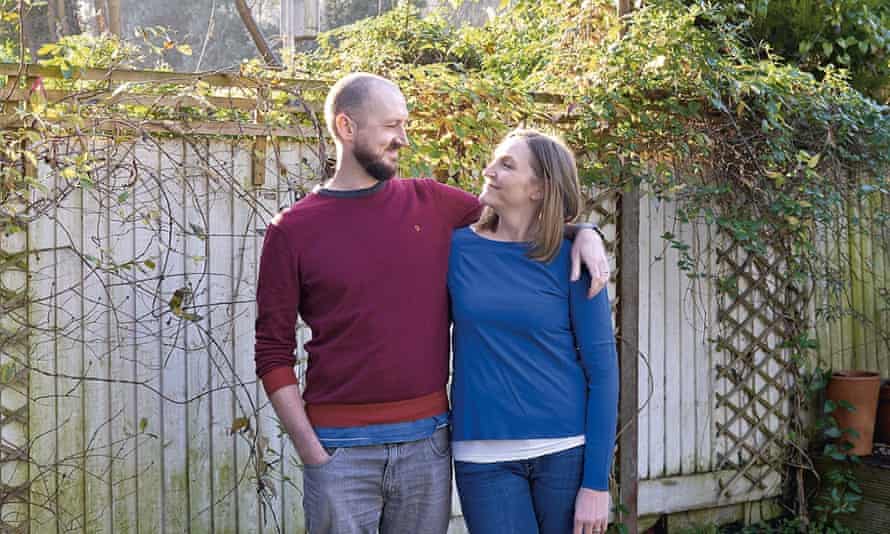
J ohn and Dan met online when John was 19 and Dan was 17. They were from similar backgrounds, land boys who, growing up, hadn't known anyone else who was gay. When it turned out they were attracted to each other as well, they couldn't believe their luck. They were together for a year before life intervened; when, two years later, they bumped into each other once more, the attraction was stronger than ever. They knew they wanted to spend the rest of their lives together, and announced to their respective parents that they would be entering into a civil partnership.
The response was firsthand: they were 21 and 23 – way too young. "But and so nosotros both sat our parents down," John says, "and I told my mum I knew she was 21 when she got married. And Dan sat his mum down, who was also 21 when she got married. And we said, 'Yous're all a bunch of hypocrites.' They shut up and left us to it" – though not without John'south mother pointing out that she had besides been divorced, and that marriage was non to be undertaken lightly. "It just went over my head. We were in dearest and heading to our wedding, uncomplicated as that." And so their life together began equally everyone hopes these things will brainstorm – with honey, joy, promise, and in defiance of whatever boring naysayers.
But before this year, after iv years of civil partnership, John and Dan filed for divorce. Every divorce is an individual grief; it is as well, however, office of a greater cultural story. This is not just that divorce rates are high, though that is part of information technology (2012, the last year for which the Office for National Statistics has published figures, saw a slight increment in the number of divorces, to 42% of marriages). Almost half of divorces happen in the starting time 10 years of marriage, and the charge per unit is especially high betwixt the fourth and eighth ceremony. The average historic period at divorce was 45 for men and 42 for women, which masks a more interesting statistic: by far the highest divorce rates have been among women aged 25-29 and men aged either 25-29 or 30-34, depending on the year.
Over the past few months, I've talked to a number of people who were divorced by the age of thirty, about their get-go, early marriages. I accept discovered, predictably, that there are every bit many narratives as there are unions (or perhaps, it would be truer to say, every bit with traffic accidents, as many stories every bit there are witnesses, ie at to the lowest degree two). Only there are some things that come through once again and once again.
That the hurting and problem of a difficult union are ofttimes a huge shock – "The church tells them marriages are made in sky, but so are thunder and lightning," every bit a wry matrimonial lawyer once put information technology. That divorce, though easier and more common than it was in previous generations, is nevertheless traumatic – the cliches of a messy or painful divorce are non only cliches, lawyers and therapists will tell you wearily, but tautologies.
But I also institute that people who survive what are sometimes called starter marriages often learn things they could not have learned in any other way – not even by cohabiting. And that these things might help them go on to brand far stronger unions than they might otherwise accept made.
Westward hether or not a young couple stay together oftentimes depends on why they married in the first place, says Kate Figes, author of Couples: The Truth, a book for which she interviewed more than 100 couples. If it'south because "they want an expensive political party, to exist centre stage for a day, because they have romanticised notions of finding their 'soulmate', or want the imagined extra security wedlock might bring, they could exist in for a nasty daze, and a speedy separation," she says. "On the other hand there are people who marry, say, their childhood sweetheart, or the person they fell in honey with at university. They grow up together."
Many of the people I spoke to in fact cruel into the latter camp – they met early, yes, often at university; but in that location were years of dating, of sharing lives and possessions, before they actually married.
Kieron Faller, 34, manages a music engineering science company and lives in London. He met his first wife on his starting time day at Canterbury University, and they were engaged a twelvemonth later. "It didn't feel like we were being weirdly over-committed or obsessed with each other to the exclusion of our friends or other stuff that was going on," he says. They married four years subsequently they left academy, by which time they endemic a house, two dogs and a equus caballus, and were both working.
Alison Martin, 42, a self-possessed teacher at a school in West Sussex, also met her ex-husband at university. It was her beginning calendar week at Queen's in Belfast. He was funny, good-looking, and "I suppose it was very lighthearted, y'all know, as girlfriend and boyfriend, then it got more serious when we were living together." They had been together for seven years when they married in 1999.
Laura Paskell-Brown, 34, now a doula in San Francisco, met her husband in her outset yr at Oxford, when they were both campaigning against the introduction of tuition fees. "I saw this man – he seemed to have information technology all together. He lit up the room every time he walked into it, and I was like, if I can't be that person, I can marry that person," she says. "I idea he'd run across how interesting and fabulous I was, then we'd live happily ever subsequently."
But happily ever after is a large part of the problem. As a civilization nosotros seem to believe that marriage is a kind of end signal and a solution to all ills, rather than the start of a complex process that, depending on who we are and how we deal with it, could go whatsoever mode at all. The key question, says Susanna Abse, a psychotherapist and CEO of the Tavistock Center for Couple Relationships, is: "Can [a marriage] tolerate the procedure of disillusionment, the facing up to limitation that all long relationships have to go through?"
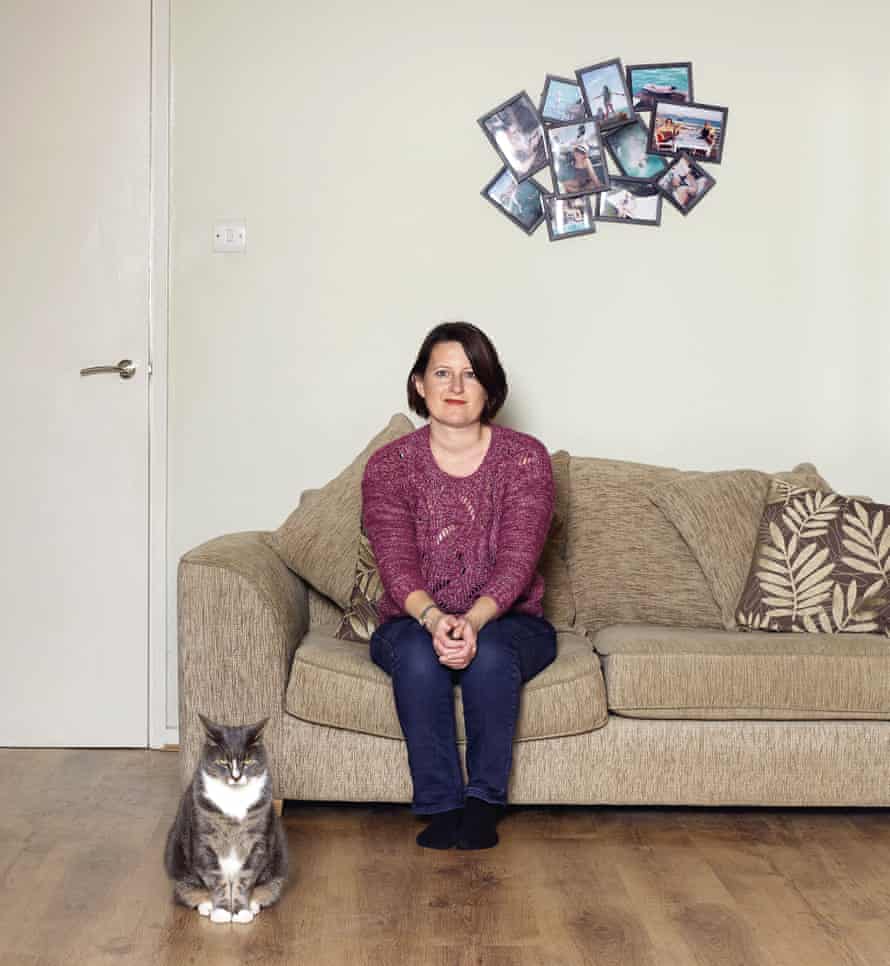
This disillusionment can set in surprisingly quickly. "I remember my mum proverb to me, 'Oh, isn't it fun when you are starting time married?'" says Lindsay, 34, an American from Oregon who met her ex-hubby when she sat down next to him in a youth hostel in Salzburg. They conducted a long-distance relationship for a couple of years, before she came to Britain to exist with him. They married when her student visa ran out. "And I was like, 'Oh really? When does it get fun?' And that is not a criticism of him, I retrieve nosotros just didn't know what sort of existence marriage really is." Unable to cope with its strictures and its import, she began to pull abroad in all sorts of unconscious ways. "He was e'er a much more sensible character, and I, of a sudden, just started going out and getting really drunk all the time, and hanging out with people he didn't similar." At the aforementioned time her work equally a business managing director in architecture and design was going well. "I became more confident in myself."
Schoolteacher Alison remembers having serious doubts a calendar month or two before her nuptials. It was a church wedding, not massive, only involved all their family, "so there was a lot of buildup. Merely I thought you either got married or you split up and information technology was over. You know information technology's non 100% right, just do you endeavor to make it piece of work because, ultimately, you nevertheless love them? And then I went in knowing in that location was a good chance it wasn't going to piece of work. But at that place was also a expert adventure it would work."
The day that really sticks in her memory, however, is the 24-hour interval after the wedding, when she and her new husband were meant to clean out their sometime flat in preparation for renting it while they were on honeymoon. "Our friends had come up in and trashed it, there was confetti everywhere, lipstick all over the mirror, all over the toilet," she says. Her husband went to drop off his conform and planned to join her in the cleaning. "Viii hours subsequently, he came home. He'd been out, had a few drinks with his friends. We were leaving first matter in the forenoon. It'south not a not bad way to start your marriage off, and I suppose that carried on, really."
Paul, 45, also a teacher, had been with Nathalie for five years before they got married, and says they never got used to information technology. "We both fought against the idea," he says. "I recall the day we got engaged, Nathalie threw upward because she was so anxious. We didn't call each other hubby and wife; information technology sounded likewise permanent. At our wedding – quite traditional, formal, in a church building – I retrieve somehow the kickoff dance didn't happen considering, 'Oh no, we're not going to do that,'" he says. He is especially struck now past the fact that they "fought a lot in that outset twelvemonth – a lot more than in the previous four or five. I'chiliad sure it was a reaction to the thought that nosotros were tied together for the remainder of our lives."
Information technology didn't help that they found their lives going in different directions. Paul went back to university, while Nathalie went direct into piece of work, and progressed apace. "Information technology was heady and at that place was lots of opportunity to go places. Merely information technology was not something we were sharing – I was stuck at home, and she would resent me for not doing the aforementioned thing." While this type of deviation tin happen at whatever fourth dimension in our lives, it tends to happen especially in our 20s and early on 30s.
M arriages that are built on fairytale promises, equally Laura admits hers was, begin to founder when reality comes into view. She got married two months afterward her finals, in 2001, and what she did, she says, was "paint a picture. But every bit that started to crevice away – as it inevitably does – I became more and more defensive." They began to fight a lot. "I was constantly trying to tell him what he was doing incorrect, trying to control him and change him. I could exist really fell." They moved to San Francisco in 2003, because her husband was studying at that place, and she realised two things: one, that she had institute her home, and two, that she was leaving her marriage.
Others detect that things that seemed manageable before marriage are the source of building resentments. Alison, for instance, found that her married man would go out with his friends at the weekend while she stayed at abode, preparing lessons and doing the housework.
So there are factors that have the capacity to bring everything to a head. Money is i. "He'd say, 'Well, yous chose to take a depression-paid task,'" Alison says. By and so they'd had a (planned and wanted) babe, and children are another acknowledged wedlock stressor. They bring high strain (in terms of finances, fatigue and housework) and often highlight dissimilar standards of care. "It wasn't an piece of cake time," Alison says. "It reinforced but how unlike we were. Before, when we argued, I just thought, 'Well, we'll make up a few hours after.' But when you've got a child, you don't want to be falling out all the time."
Eventually, two years into their marriage, it all became overwhelming. "I was lying in bed," she says, "it was three in the morning, he hadn't come domicile, I'd rung his mobile I don't know how many times, but there was no respond. And then, it sounds atrocious, only I thought, exercise you know, if the police knock on the door and say he's been hit over the head and is lying in an alley, it'll actually be a relief." The side by side solar day she picked upwards the phone and began looking for backdrop to rent.
West lid is love? This was the most searched question on Google in 2012 (followed in 2013 by "What is twerking?") – and at that place are probably at least as many answers as there are searches. Ane answer is that it might not be what we think information technology is, if we call up about it at all. "Nosotros never talked nigh whether we loved each other," Paul says, "or what beloved meant. Nosotros sort of ran away from that question."
In Committed, Elizabeth Gilbert'due south sometimes irritatingly chirpy but too oft wise report of marriage, she argues that we choose partners partly every bit an expression of our deepest aspirations for ourselves – in terms of didactics, appearance, accomplishment: "Your spouse becomes the nearly gleaming possible mirror through which your emotional individualism is reflected back to the world." Only if, as is then often the case when we are young, you have little idea of who yous are or desire to be, and so it is piece of cake to brand the wrong choice.
"The problem was getting married in our early 20s," says John, who is 27 and works in publishing. "We were too young, unproblematic every bit that. I wish both of us had had a life earlier we settled down." Eventually, John and his partner were both unfaithful – a common factor in divorce at any age. "That'due south when you know a human relationship is at its end."

Paul felt he was too young to empathize what marriage meant. "In your 20s, you recall you lot're an adult and in control of your life, but you're basically an idiot. You don't have the self-knowledge you remember you do." Information technology took him a few years – until he plant himself in another serious relationship – to begin to disentangle what had happened.
For Laura, the San Francisco-based doula, it wasn't until she was in another hard relationship in her 30s that she "had a moment of realisation. I was going through old diaries, and I saw that the state of my relationship was pretty much the same equally information technology was at the end of my marriage, and the common denominator was me."
This is not unusual, says couples therapist Avi Shmueli, as all our relationships unconsciously follow patterns prepare early on in our lives. "Every homo," he says, "is built-in into a powerful human relationship" with their primary caregiver, which "sets up a very powerful influence on the internal architecture of the mind". So, for instance, a depressed parent might not be able to respond across providing food and shelter. "The child begins to remember that either at that place's no point in trying to play with anyone, because yous don't get a response, or that they are responsible for the bad feeling. They might exist someone who tries very hard and yet feels they never quite go it right – they tin't make someone happy."
These are patterns that, over again unconsciously, we ofttimes recognise in others. But information technology's nuanced, Abse says, "because in one relationship you can choose someone who had a similar experience to you. And that could be a really good relationship – where the early experience can be healed." Or, she says, "it could exist a machine crash".
Whether a relationship works depends partly on the caste to which each of you is enlightened of how y'all accept been shaped past your early experiences; and then on whether you are able and willing to be flexible, to change and to abound. And since this is the kind of cocky-knowledge that usually comes with age, those in early marriages are less likely to have come up equipped with the necessary tools.
"One of the main things I sympathise now," Kieron says, "is that I was very much the compromiser." His then wife had clear ideas nearly what she wanted in life, and he wanted to help her. "I recollect that was just me being a perfectionist. Compromise is supposed to be a adept thing, so if I compromise a lot, then I must be doing really well." In fact, he discovered, the imbalance that resulted wasn't healthy for their human relationship.
Sometimes this issue of balance is reflected through gender roles, both in basic issues of equality – when information technology comes to housework, for instance, as Alison found – and in more complex issues of conditioning and expectation. "I had this thought of what a good married woman should exist, based on what I had seen from my own mother," Lindsay says. "I had in my mind that I needed to be up making breakfast and to make sure dinner was on the table – I put a lot of pressure on myself to fit this mould of what peradventure my parents wanted me to be as a married woman, equally opposed to what I wanted to be." As Gilbert writes, contemplating her ain imminent second marriage, "I do believe that one should at least try to understand one's mother'south wedlock before embarking on a marriage of one's own."
Femininity – or at least, a particular construct of femininity – "is often linked with submerging oneself in terms of other people's needs and desires," Abse says. "That is a theme in lots of relationships that pause downwardly – women decide the relationship itself is not going to be able to allow them a more than autonomous cocky." For men, information technology is oftentimes the contrary side of the same coin, an "anxiety nearly regression". "Therapists run into a lot of men who are depressed and withdrawn considering they tin't express their anger and their feelings," Abse says. "They're oftentimes preoccupied with dissentious their partner, whom they run across every bit quite fragile. If you did a big analysis of those early on relationships, you might find that is a common theme: mutual suppression of the private self in favour of the relationship. And in the next relationship, they're able to be more than autonomous."
That was certainly what schoolteacher Paul institute. "Nosotros didn't accept a way of communicating in a nonjudgmental, rational way that didn't involve blaming or punishing the other person. It was a lack of maturity – y'all're both frightened by what you lot don't desire to acknowledge to." At present, he says, "You remember, 'Shit happens' and you face up to it and talk nearly it. In my 20s, I didn't have that ability or that insight."
T his, then, is the real question: can the trauma of divorce lead to a new manner of doing things? Laura remarried earlier this yr. Kieron and Lindsay, having left their beginning marriages, met online and married each other three years ago; they at present have a 17-month-old girl. Paul is in a long-term human relationship which has produced two children. John, at this point, has no intention of getting married over again (his mum thinks otherwise). Alison, meanwhile, is a prime number example of what Gilbert describes as someone freed from "the Tyranny of the Bride": having done it once, and particularly having had a child, she feels no overwhelming need to practice it again. She is not against marriage, just over the years has built a life that makes her happy, and that she volition not put in only anyone'south easily. She carries a checklist in her head of non-negotiables, and she's not the just 1.
"I think everyone should take the conversation start, really, even if it's with a counsellor," Alison says. And that conversation should involve going through a list of things such as, on a scale of one to 10, how far do you feel the woman's role is in the home, or how comfortable would you feel if your wife earned more, or what do you lot think is an acceptable corporeality of time to spend together? Ultimately, she says, it comes down to respect. "Respecting that other person and wanting to make them happy, you know? That your lives are better together than apart."
John's communication would exist to ask what y'all each desire in x years' time. "That volition flush fundamental differences out pretty speedily." Information technology is also something many, peculiarly young people often just don't think to ask.
"Who are you?" Lindsay says. "What do you want to practice with your life?" And who, exactly, are they? Remember that while people can change a bit, the fundamental person is probably always still there.
Paul agrees. "There are things that are innate to us. The outcome isn't about irresolute them, but recognising them and existence wary – of letting things drift, for instance, or allowing issues to develop their ain life in your head… always a recipe for disaster." Talk about problems, he says, trying if at all possible to have into account who each person is and where they're coming from – and non taking it equally a personal set on if they disagree.
This is what comes upward again and over again: communication, and especially the forms that communication takes. When Laura remarried, her chief priority was to plant that she and her new married man could manage differences fairly and with pity. "Are you open to talking about information technology?" she asked. Could they be honest, and could they be vulnerable? "Because that'south what everyone wants in a friendship. It's also what everyone wants in a marriage. Not only was I not capable of that at 21, I didn't even know it existed."
And tin can they be supportive, without being decision-making? It isn't like shooting fish in a barrel, but at to the lowest degree these people know to attempt. It used to be, for instance, that if Lindsay had a bad 24-hour interval at work, Kieron would get-go straight in on looking for a solution, telling her what she should do. "But I take hold of myself doing it now, then I volition stop and endeavor a unlike, more salubrious approach," request questions that draw out her own thoughts and solutions. This has helped Lindsay to bargain with occasional bouts of depression self-esteem. She recently quit her job in concern management to become a freelance nutrient writer and melt. It is a change she was never brave enough to make before, merely she says, "I am learning to trust my instincts again."
When you lot have both been divorced, as Lindsay and Kieron accept, you tin can bring a lot of circumspection to a new relationship. "Nosotros had to be realistic," Lindsay says, "considering your expectations are dissimilar." Merely this is not necessarily a bad affair – in fact, information technology tin be quite the opposite. "My aunt thinks everyone should have a starter matrimony, then go on to their real marriage afterwards," she says. "I definitely experience it was a practiced education for me. As traumatic as information technology was and as sad every bit it was, I am really glad it happened."
- Some names accept been inverse.
Source: https://www.theguardian.com/lifeandstyle/2014/dec/19/-sp-why-do-so-many-young-marriages-come-to-an-early-end
0 Response to "What Time Do They Go to Work and Come Home What Time Do They Go to Work and Come Home Art Therapist"
Post a Comment